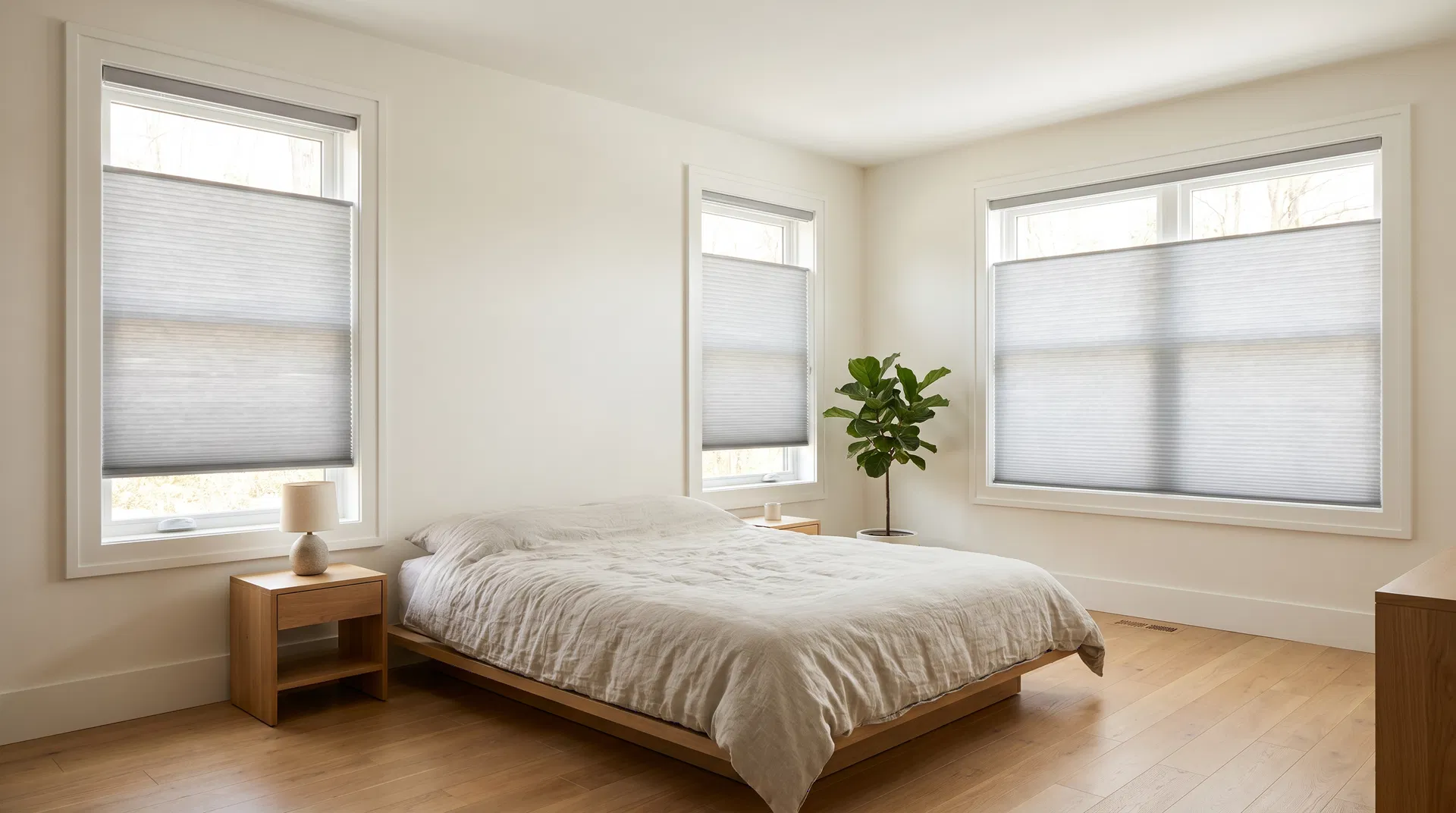
Cellular roller shades can be a good fit for Las Vegas, Nevada bedrooms when you want a clean roller-style profile with an added cellular layer at the window. Hunter Douglas Sonnette® Cellular Roller Shades combine a simple rolling form with a 2 inch cell and are available in semi-opaque and room-darkening fabrics. They are worth considering for bedrooms, but the result depends on fabric, mounting, edge light, window conditions, and your privacy expectations.
The main question is not simply, "Is this a bedroom shade?" It is, "What does this bedroom need at night, at sunrise, and during the hottest part of the day?" A guest room used occasionally may need something different from a primary bedroom used every night.
What Makes a Cellular Roller Shade Different?
A standard roller shade uses a single rolling material. Sonnette Cellular Roller Shades add an insulating cellular layer while keeping a streamlined roller appearance. The 2 inch cell creates a softly curved look across the window, and the fabric produces soft radial light when illuminated.
This construction can appeal to homeowners who like cellular design benefits but do not want the familiar stacked appearance of a traditional cellular shade. It also gives a bedroom more visible texture than a flat roller material.
The insulating layer is useful to consider, but it does not promise a specific energy reduction. Glass, exposure, fit, fabric, and daily use still affect the room.
Choose Between Semi-Opaque and Room-Darkening Fabric
Sonnette fabrics are offered in semi-opaque and room-darkening choices. The names describe different light-control directions, but neither label tells the whole story.
A semi-opaque fabric can soften daylight while providing a substantial visual surface at the window. It may suit a bedroom where some morning light is welcome or where the shade is often lowered during the day. A room-darkening fabric is intended for stronger light reduction and may be more appropriate for a light-sensitive sleeper, a west-facing bedroom, or a room used by someone who sleeps during daylight hours.
Room darkening is not the same as total blackout. Light can still appear around the top, bottom, or sides of a shade, especially with an inside mount. The color of the fabric, wall color, window trim, and brightness outside can also influence how dark the room feels. If darkness is a leading goal, review the complete opening instead of relying on the fabric name alone.
Look Closely at Side Gaps and Mounting
Every roller-style shade needs operating clearance. That means the fabric may not cover every part of the glass in the same way a fixed panel would. On a bright Las Vegas morning, a narrow line of light can be noticeable in a dark room.
An inside mount places the shade within the window frame and often creates a tidy appearance. It requires enough mounting depth and leaves the relationship between fabric and frame visible. An outside mount can extend beyond the opening and may cover more of the surrounding area, though it changes how the shade sits on the wall or trim.
The better mount depends on the window and the desired look. Measure the frame depth, handles, locks, trim, and nearby furniture before deciding. Custom measurement is especially useful when several bedroom windows need to align visually.
Plan for Privacy After Dark
Bedroom privacy should be evaluated at night, not only in daylight. Turn on the room lights and consider the window from outside or from the neighboring sightline. Semi-opaque and room-darkening materials behave differently, and the selected color can affect the appearance.
Sonnette offers an optional Kickback privacy feature in selected configurations. A front-roll configuration is also available. These details can change the relationship between the material, hardware, and window, so ask to see how they work rather than choosing from the feature name alone.
If the bedroom faces a walkway, street, or close property line, tell the consultant exactly where visibility is a concern. Privacy is easier to plan when the real viewing angle is known.
Match the Shade to the Sleeper and Schedule
A good bedroom window treatment supports the person using the room. Consider these practical questions:
- Does direct sun reach the bed in the morning or late afternoon?
- Does someone in the room sleep during the day?
- Is a small amount of filtered morning light pleasant or disruptive?
- Will the shade stay lowered most of the day?
- Is the window behind furniture or difficult to reach?
- Does the room need privacy from a street, patio, or neighboring window?
- Are there multiple windows that should open and close together visually?
Answers to these questions help narrow the fabric and mounting choices. They also prevent a common mistake: selecting the darkest sample when the real issue is a bright gap at one edge, or selecting a light-filtering fabric when nighttime privacy is the actual priority.
Consider Color and the Rest of the Room
Sonnette has a sculpted appearance, and its color changes the transmitted light. Place samples next to bedding, flooring, paint, and trim, then view them with the bedroom lights on and off. A pale fabric may create a gentle glow, while a deeper tone can make the cellular form more prominent.
The cellular shades service page provides an overview, but an in-room sample check is the better way to judge tone and transmitted light.
Compare It with Other Bedroom Options
Sonnette is a strong candidate when you want a roller profile, cellular texture, and semi-opaque or room-darkening fabric. Other bedrooms may call for a flatter material, adjustable vanes, or a layered treatment. Different products can still share a coordinated color direction.