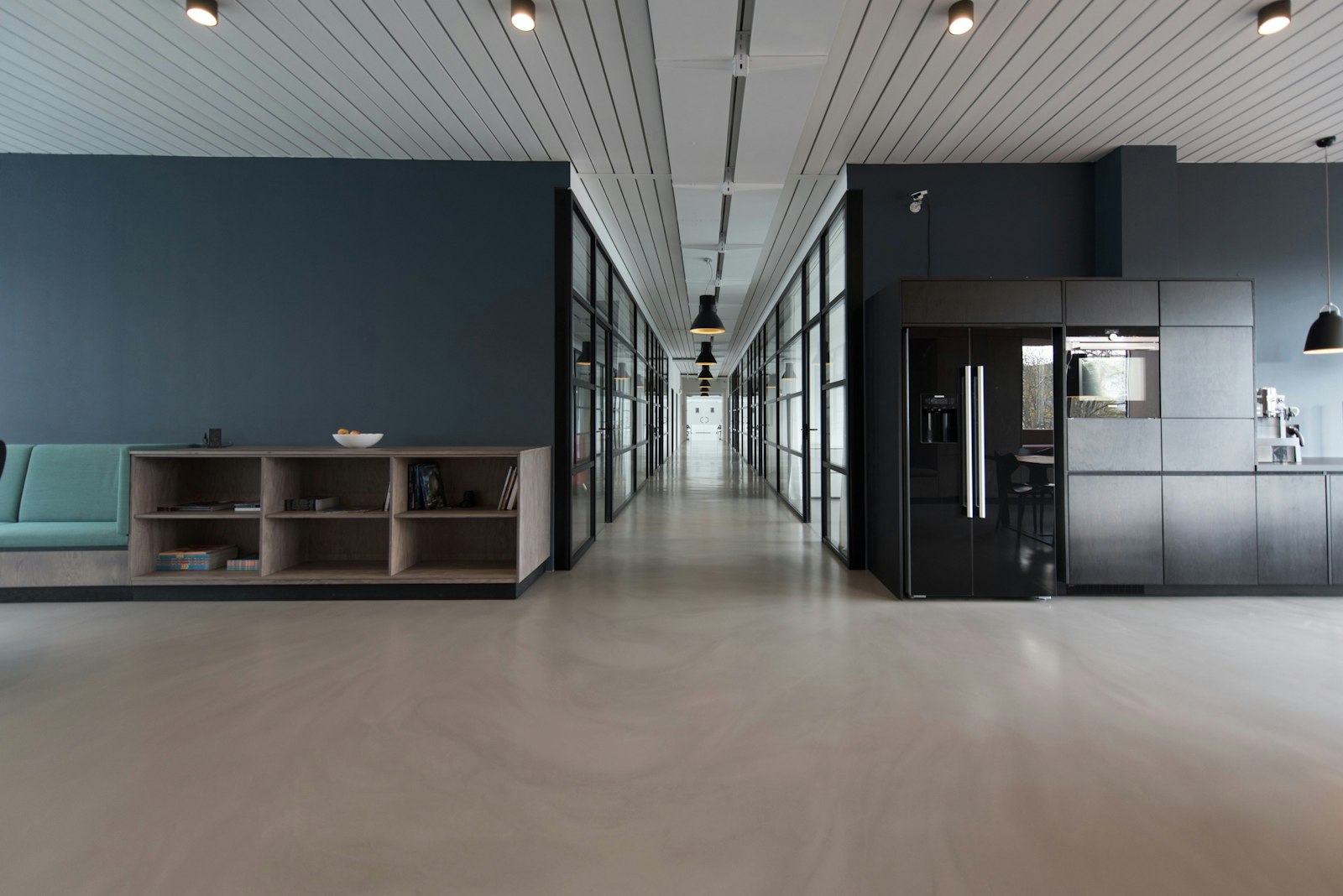
Las Vegas is one of the most commercially active design markets in the United States. The city's hospitality industry alone encompasses hundreds of hotels, resorts, casinos, restaurants, and entertainment venues — each competing to create an environment that is visually compelling, durable enough to withstand constant foot traffic, and aligned with a distinct brand identity. For business owners, interior designers, and property managers across Las Vegas, Henderson, and North Las Vegas, choosing the right commercial wallcovering is one of the most consequential decisions in any renovation or new-build project.
Commercial wallpaper is not simply residential wallpaper used in a business setting. It is a distinct product category with its own engineering standards, performance ratings, and design vocabulary — and understanding those differences is essential before specifying any wallcovering for a commercial space.
Quick Summary: Commercial wallcoverings are manufactured to meet Federal Specifications CCC-W-408 and are rated by type (I, II, or III) based on weight and durability. Choosing the correct type for each zone of your Las Vegas property — and pairing it with the right design aesthetic — determines both how long the wallcovering lasts and how well it represents your brand.
What Makes Commercial Wallpaper Different from Residential
The fundamental distinction between commercial and residential wallcovering lies in performance engineering. Residential wallpapers are designed primarily for aesthetic appeal in lower-traffic domestic settings — bedrooms, living rooms, dining rooms — where the walls are rarely subjected to abrasion, impact, or frequent cleaning. Commercial wallcoverings, by contrast, are produced specifically for hotels, apartment buildings, office buildings, retail outlets, schools, and hospitals, and must meet or surpass minimum physical and performance characteristics set forth in Federal Specifications CCC-W-408 as established by the Wallcoverings Association.
The most widely used commercial wallcovering substrates are vinyl-based. Vinyl coated paper features a paper substrate on which the decorative surface has been sprayed or coated with an acrylic vinyl or PVC. Paper-backed vinyl — also called solid sheet vinyl — uses a paper substrate laminated to a solid decorative vinyl surface, making it scrubbable and peelable. Fabric-backed vinyl, the most durable of the three, uses a woven or nonwoven synthetic substrate laminated to a solid vinyl decorative surface, providing the highest level of dimensional stability and abrasion resistance.
Beyond substrate construction, commercial wallcoverings offer practical advantages that paint cannot match. High-quality commercial wallcoverings can last 5–10 times longer than paint in comparable environments, resisting scuffs, stains, and daily wear — particularly in corridors and public areas. Fabric-backed and textured wallcoverings also improve sound absorption and thermal comfort, reducing noise levels and energy strain in ways that a painted surface simply cannot.
Understanding Type I, Type II, and Type III Wallcovering
The commercial wallcovering industry classifies products into three performance tiers based on weight per linear yard and the level of traffic they are engineered to withstand. These designations — Type I, Type II, and Type III — are the standard specification language used by architects, interior designers, and procurement teams across the hospitality and commercial construction industries.
| Type | Weight | Traffic Level | Best For |
|---|---|---|---|
| Type I — Light Duty | 12–19 oz/linear yd | Light to moderate | Private offices, boardrooms, low-traffic retail |
| Type II — Medium/Heavy Duty | 20–28 oz/linear yd | High traffic | Hotel guestrooms, corridors, restaurants, schools |
| Type III — Heavy Duty | 33–36 oz/linear yd | Most heavily trafficked | Elevator banks, casino floors, hospital corridors, service areas |
Source: Wallcoverings Association — Federal Specifications CCC-W-408
Type I: Light Duty
Type I wallcoverings weigh between 12 and 19 ounces per linear yard and are designed for areas of light to moderate traffic. They are appropriate for private offices, boardrooms, executive suites, and low-traffic retail environments where aesthetics are the primary consideration and heavy-duty durability is not required. Type I products offer the widest range of decorative options, including string effects, natural textiles, and specialty finishes that would not be practical in higher-traffic zones.
Type II: Medium/Heavy Duty
Type II fabric-backed vinyl wallcoverings weigh between 20 and 28 ounces per linear yard and represent the most commonly specified product for commercial interiors. They are engineered for high-traffic areas — hotel corridors, guestrooms, restaurant dining rooms, school hallways, and medical clinic waiting areas — where the wallcovering must withstand daily contact, cleaning, and the occasional impact without showing premature wear. Type II products strike the balance between toughness and aesthetic versatility that most commercial projects require.
Type III: Heavy Duty
Type III wallcoverings weigh between 33 and 36 ounces per linear yard and are specified for the most demanding environments — elevator banks, casino service corridors, airport terminals, and hospital hallways where walls may be struck by carts, equipment, or luggage on a daily basis. Type III provides superior impact and abrasion resistance compared to Type II, and is the appropriate specification wherever the risk of physical damage to the wall surface is highest.
Commercial Environments in Las Vegas That Rely on Wallcovering
Las Vegas presents a uniquely concentrated commercial design market. The sheer density of hospitality, entertainment, retail, and office properties within the valley — and the competitive pressure each property faces to differentiate itself — makes wallcovering one of the most actively specified materials in the region.
Hotels and Resorts
The Las Vegas hospitality market demands wallcoverings that perform at the highest level while contributing to a carefully crafted brand environment. Hotel guestrooms typically specify Type II fabric-backed vinyl in designs that reinforce the property's aesthetic identity — whether that is the sleek, modern sensibility of a contemporary resort or the warm, residential feel of a boutique property. Corridors and elevator lobbies, which experience the highest volume of luggage contact and foot traffic, often require Type III specifications. Public spaces such as lobbies, ballrooms, and restaurant interiors are where designers have the greatest creative latitude, frequently specifying custom murals, specialty textiles, or acoustical wallcoverings to create the immersive environments that modern travelers expect.
Casinos and Entertainment Venues
Contemporary casino design has moved decisively away from the dark, windowless interiors of earlier decades toward open, airy layouts with high ceilings, strategic lighting, and materials that convey sophistication and luxury. Wallcovering plays a central role in this transformation. Thematic design concepts — immersive environments that transport guests through carefully curated visual narratives — depend on wallcovering as a primary surface material. The scale of casino floors and entertainment venues means that wallcovering selections must be both visually impactful at a distance and durable enough to withstand the continuous foot traffic and operational demands of a 24-hour facility.
Corporate Offices and Professional Services
Las Vegas's growing professional services sector — encompassing law firms, financial institutions, medical practices, and technology companies — has driven demand for commercial wallcovering that communicates credibility and refinement. Type I and Type II products in neutral palettes, subtle textures, and sophisticated patterns are commonly specified for reception areas, conference rooms, and executive offices. Acoustical wallcoverings, rated with a Noise Reduction Coefficient (NRC), are particularly relevant for open-plan offices and meeting rooms where sound management is a functional priority.
Restaurants and Retail
Food and beverage and retail environments in Las Vegas face a dual challenge: the wallcovering must be durable enough to withstand cleaning, moisture, and daily wear while also contributing to an atmosphere that keeps guests engaged and encourages return visits. Type II vinyl wallcoverings with scrubbable surfaces are the standard specification for restaurant dining rooms and bar areas. Retail environments — particularly in the luxury segment — increasingly use custom-printed digital wallcoverings and specialty textiles to create brand-immersive environments that distinguish the physical store experience from online alternatives.
2026 Commercial Wallcovering Design Trends
The commercial wallcovering market in 2026 is shaped by several converging design directions that reflect broader shifts in how businesses think about their physical environments.
Restorative Luxury and Neuro-Aesthetic Design
The dominant direction in hospitality design for 2026 is what industry observers have termed Restorative Luxury — a movement rooted in neuro-aesthetics, wellness, and emotional comfort. Hotels and resorts are specifying wallcoverings with soft, organic palettes that mimic natural environments, subtle gradients that reduce visual noise, and patterns designed to lower stress and enhance mood. These surfaces do more than look beautiful — they create a psychological experience that guests feel immediately upon entering a space. In a hospitality landscape where wellness is a top differentiator, wallcovering has become a functional tool for emotional impact.
Tactile Textures and Fabric-Backed Vinyls
Texture is taking center stage across commercial interiors. Designers are moving away from flat, painted walls and toward tactile surfaces that add depth and authenticity. Trending textures include wabi-sabi finishes with hand-troweled character, fabric-backed vinyls that combine luxury with extreme durability, linen weaves, grass cloth-inspired patterns, and embossed geometrics. These materials create a multisensory environment that feels crafted rather than manufactured — a quality that resonates strongly with the discerning guests and clients that Las Vegas commercial properties compete to attract.
Hyper-Localized Murals and Custom Digital Printing
Advances in digital printing technology have made fully custom wallcoverings — including branded graphics, unique patterns, and one-of-a-kind murals — accessible to a much wider range of commercial clients. Hyper-localized murals featuring local landscapes, cultural motifs, and regional artistic references are increasingly common in Las Vegas hospitality and retail environments. These installations turn walls into storytelling canvases and create the kind of visually distinctive moments that guests photograph and share — generating organic marketing value that extends well beyond the physical space. Custom wall murals are one of the most requested services for Las Vegas commercial clients.
Biophilic Patterns and Earth-Toned Palettes
Biophilic design — the integration of natural forms, materials, and patterns into the built environment — continues to be a dominant force in commercial interiors. In 2026, the approach has become more sophisticated: rather than literal botanical prints, designers are using abstracted, layered, and textural interpretations of nature. Mineral-inspired marbling, oversized leaf shadows, watercolor-like organic forms, and earth-toned palettes that evoke natural materials are all widely specified. These patterns support the Restorative Luxury movement while offering the durability and cleanability that commercial environments require.
How to Choose the Right Commercial Wallcovering for Your Space
Selecting the correct commercial wallcovering involves evaluating several variables in combination: the traffic level of the space, the functional requirements of the environment, the design intent, and the long-term maintenance expectations of the property.
The first variable to consider is traffic volume. The Wallcoverings Association recommends that paper and natural wallcoverings be reserved for areas of minimal traffic, while vinyl and synthetic textile wallcoverings — with their maximum durability and ease of cleaning — are appropriate for hospitals, sporting arenas, schools, and other high-traffic situations. For most Las Vegas commercial properties, Type II fabric-backed vinyl is the baseline specification, with Type III reserved for the highest-impact zones.
Functional requirements beyond traffic should also be assessed. Spaces where sound management is a priority — conference rooms, restaurants, open-plan offices — benefit from acoustical wallcoverings rated with an NRC. Spaces where moisture is a factor, such as spa facilities or commercial kitchens, require wallcoverings with appropriate moisture resistance ratings. Healthcare environments have additional requirements around antimicrobial properties and ease of disinfection.
Design intent and brand alignment are equally important. The wallcovering specification should reinforce the visual identity of the property — not simply meet the minimum performance standard. A luxury resort corridor and a corporate law firm reception area may both specify Type II wallcovering, but the design selections will differ entirely. Working with a qualified commercial wallcovering specialist who understands both the technical specifications and the design vocabulary of the Las Vegas market ensures that the final selection achieves both objectives.
Specialty Wallcovering Options: Beyond standard vinyl types, the commercial market includes string effects (appropriate for offices and boardrooms), natural and synthetic textile wallcoverings, acoustical wallcoverings for sound-sensitive spaces, cork veneer, digital wallcovering with unlimited custom designs, and wood veneer for conference rooms and specialty areas. Each has specific performance characteristics and appropriate use cases.
Wallpaper Elegance: Commercial Wallcovering in Las Vegas
Wallpaper Elegance has extensive experience sourcing and specifying commercial wallcovering for hotels, restaurants, offices, and retail spaces throughout the Las Vegas Strip and valley. Our team works directly with property owners, interior designers, and general contractors to identify the correct product type, performance specification, and design direction for each project — from a single accent wall in a boutique restaurant to a full-property wallcovering program for a hotel renovation.
We also offer residential wallcovering for homeowners across the Las Vegas valley, and our custom mural services are available for both commercial and residential clients. Whether you are specifying a commercial project or designing your home, our showroom at 5525 S. Valley View Blvd, Las Vegas, NV 89118 carries an extensive selection of wallcovering collections from leading manufacturers.
To discuss your commercial wallcovering project, schedule a consultation through our online booking calendar or visit our showroom directly. Our team is available to review project specifications, provide product samples, and develop a wallcovering program tailored to the specific requirements of your Las Vegas commercial space.