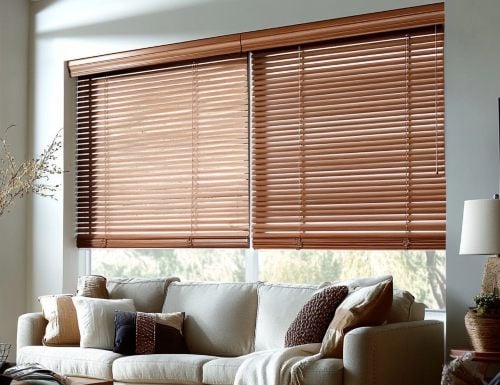
Real wood blinds offer the grain, warmth, and character of natural basswood. Alternative wood blinds provide a wood-like appearance with material designed to stand up to humidity and sun better than real wood. For a Las Vegas, Nevada home, neither option wins every room. Window exposure, blind size, desired finish, and the conditions inside the room should drive the decision.
Wallpaper Elegance offers Hunter Douglas Parkland® Wood Blinds and EverWood® Alternative Wood Blinds. Comparing actual slats is helpful because online photos tend to flatten the differences in grain, paint, and texture.
Why Homeowners Choose Real Wood Blinds
Parkland Wood Blinds are made with real basswood and come in paint and stain choices. Natural wood has subtle variation. On stained blinds, the grain can connect nicely with cabinetry, flooring, furniture, or ceiling details. Painted wood has a crisp finish while retaining the lighter feel and character of the material.
Weight is one practical reason people consider wood. Real basswood can be lighter than some alternative wood materials, which may affect how a larger blind feels during manual operation. The finished size and lift system matter, so this is something to evaluate for the actual opening rather than assume from a sample.
Wood is also appealing when authenticity matters. If the room has carefully matched millwork, a real stain can be easier to coordinate than a simulated grain. Bring a cabinet door, flooring sample, or clear daylight photo to the showroom. A finish that looks close under warm indoor lighting can shift near a bright window.
Why Homeowners Choose Alternative Wood Blinds
EverWood Alternative Wood Blinds are designed to handle humidity and sun better than real wood. That can make them a practical candidate for rooms with changing moisture levels or windows that receive long periods of direct light.
The phrase "alternative wood" does not mean waterproof. Installation location, cleaning method, exposure, and product specifications still matter. A window close to a sink, shower, or frequently opened door needs a more detailed conversation than a dry bedroom window.
Alternative wood can also give you a consistent painted or wood-like appearance across several rooms. For a homeowner who prefers an even finish over natural variation, that consistency may be a benefit. The material can feel heavier, especially across a broad opening, so blind size and operating preference deserve attention.
Start with the Direction of the Window
Las Vegas sunlight can be demanding, particularly on glass that receives direct afternoon exposure. Before selecting a blind, note when the sun reaches the window and how long it stays there. A west-facing family room has a different pattern than a shaded north-facing office.
EverWood is designed to stand up to sun better than real wood, but that does not remove the need to choose a suitable finish and use the blind correctly. Real wood may still be a good fit for many Las Vegas windows, especially where its appearance is the priority and exposure is less intense. Product selection should be based on the opening, not a blanket rule for the entire house.
Slat angle affects glare and privacy. Tilting the slats can redirect light while keeping some daylight in the room. Lowering a blind and closing the slats more fully provides a different result. Test both positions. A blind that looks attractive fully open should also feel comfortable in the position you will use at three in the afternoon.
Consider Humidity Room by Room
Las Vegas has a dry outdoor climate, but indoor rooms do not all behave the same way. Bathrooms, laundry rooms, and kitchens can see temporary humidity and splashes. Indoor plants, evaporative cooling, and personal routines can also change conditions near a window.
Alternative wood often deserves a closer look in these spaces because the material is designed to stand up to humidity better than real wood. That is still not permission to soak the blind or ignore care instructions. Ask how the selected finish should be cleaned and what placement limitations apply.
Real wood may be better reserved for spaces where moisture is controlled, particularly if you are choosing it for a stained finish. A living room, office, dining area, or bedroom may provide a more natural setting for basswood, depending on sun exposure and how the room is used.
Compare Care, Feel, and Daily Operation
Both materials need routine dusting. Cleaning instructions depend on the product and finish, so use the manufacturer's guidance for the blinds you order. Avoid assuming that a faux material can take any household cleaner. Chemicals and abrasive tools can affect a finish even when the base material handles humidity well.
Operate the display blinds while you shop. Notice the effort needed to lift them and how the slats tilt. If a window is wide or difficult to reach, ask whether dividing the treatment or selecting another custom blind configuration would make daily use easier.
Cord and control options vary. A home with children or pets may have different operating priorities from an adult-only household. Discuss the available systems for the specific product and size rather than relying on a photo from a different configuration.
A Practical Way to Decide
Choose real wood when natural grain, a stained finish, and a lighter material feel are leading priorities. Consider alternative wood where stronger resistance to humidity and sun is more important, or where a consistent wood-like finish suits the room. For mixed conditions, using different materials in different rooms can be more sensible than forcing one selection throughout the house.
Wallpaper Elegance can measure the openings, compare finish samples in your light, and explain which options are available for each size. Custom selection matters because the same material can behave and look different on a narrow office window and a wide family-room opening.