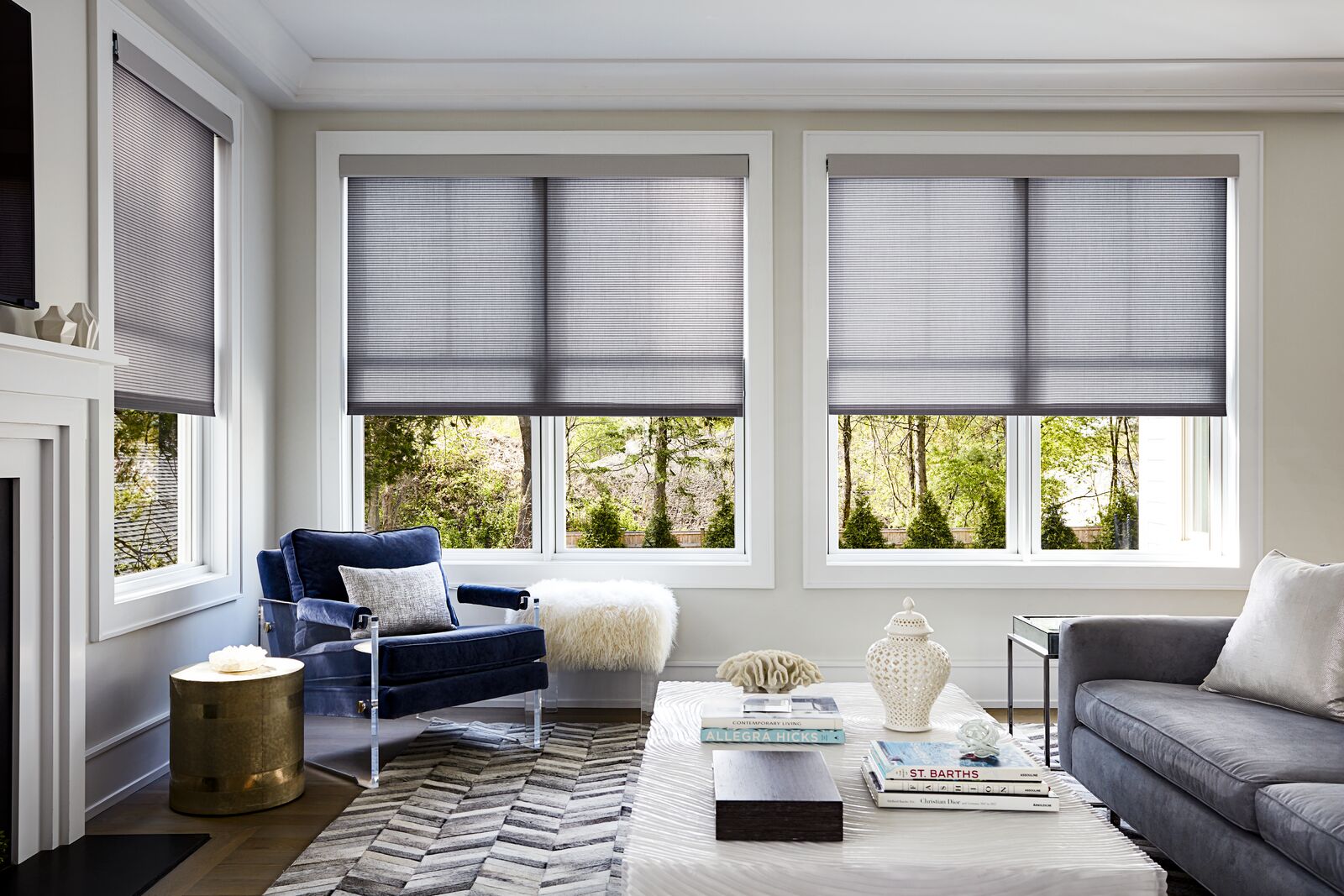
Rolling Roman shades keep a flatter profile as they open, while stacking Roman shades gather into soft folds near the top of the window. That basic difference affects the view, the fabric presence, and how the treatment feels in a room. For Las Vegas, Nevada homeowners, the right choice usually comes down to the window's proportions, the amount of fabric you want to see, and how often you plan to raise the shade.
Hunter Douglas Vignette® Modern Roman Shades are available in rolling or stacking styles, depending on the selected configuration. Both give you the tailored look of a Roman shade without exposed rear cords. They do not look identical, though. Seeing and operating both styles before choosing is worth the time.
What Is a Rolling Roman Shade?
A rolling Roman shade opens by rolling the fabric into the headrail area. Instead of building a visible stack of folds, much of the material moves out of sight. The result is neat and restrained. It can work well where the window already has strong architectural lines or where you want the fabric to support the room rather than dominate it.
Because a rolling style clears more fabric from the glass, it may appeal to homeowners who value an open view when the treatment is raised. This can matter on a window facing a yard, pool, mountain view, or city lights. The exact amount of exposed glass depends on the product, window size, and installation details, so compare the finished dimensions during your consultation.
What Is a Stacking Roman Shade?
A stacking Roman shade forms folds as it rises. Those folds remain visible near the top of the opening. The stack gives the window more visual weight and makes the fabric a stronger part of the room.
This style often suits spaces where softness is intentional. Bedrooms, dining rooms, and formal sitting areas can benefit from the layered appearance. A stacking shade can also help a tall window feel more connected to the furnishings below it because the fabric stays visible even when the shade is open.
The tradeoff is that the stack covers more of the upper glass. On a shorter window, that may feel like too much. On a tall opening, the same stack may look well proportioned. There is no useful universal rule based on room name alone. Window measurements and the view matter more.
Compare the Two Styles in the Positions You Will Use
A shade is rarely kept fully raised or fully lowered every hour of the day. Most people stop it somewhere in between to handle direct sun, privacy, or screen glare. Compare rolling and stacking styles at those everyday positions.
With a rolling style, the lower edge tends to remain the main visual line as the shade moves. With a stacking style, the developing folds become part of the composition. If several shades will sit side by side, think about how those lines will look across the full wall.
Operation matters too. Manual and automated options vary by product and configuration. Selected Vignette configurations include PowerView Automation. If automation interests you, confirm the available operating system, power source, controls, and required equipment for the exact fabric and style you choose.
Plan for Light and Privacy in Las Vegas, Nevada
Strong afternoon light can make a beautiful fabric behave differently than it did under showroom lighting. Color may appear warmer, the weave may become more visible, and the room can feel brighter than expected. Look at samples near the actual window at more than one time of day when possible.
Fabric opacity also deserves a separate decision. Vignette Modern Roman Shades have selected room-darkening configurations, but performance varies with fabric, installation, and light gaps around the treatment. Room darkening should not be treated as blackout. A bedroom, media room, and street-facing living room may each need a different balance.
Privacy changes after sunset. A fabric that looks private in daylight may reveal more when interior lights are on. During an in-home consultation, discuss the direction the window faces, nearby sightlines, and the times when privacy matters most.
Match the Style to the Opening
Standard Windows
Either style can work on a typical single window. Rolling shades usually look more minimal. Stacking shades create a fuller textile statement. If the trim is a feature you want to see, ask how each mounting approach will affect it.
Tall Windows
A stacking style can give a tall opening useful visual balance, but the finished stack needs to be considered. A rolling style may preserve more of the view. Access is another issue. If the operating point is inconvenient, ask about compatible control options rather than choosing based on appearance alone.
Groups of Windows
For two or more nearby windows, alignment becomes noticeable. Headrail placement, shade length, and stopping positions should feel deliberate. Small measurement differences can show when treatments are close together, which is one reason custom planning is useful.
Use the Room, Not a Trend, as Your Guide
A Roman shade should make sense with the materials already in the home. Rooms with stone, wood, plaster, or patterned wallcovering may need a quieter fabric. A simple room may have space for a more visible texture. Bring photos of the whole wall, not just the window, when you visit the showroom.
Also consider how often the window treatment will move. A shade that stays lowered for privacy has a different job than one opened every morning. If an unobstructed daytime view is the priority, rolling may have the advantage. If the folded fabric is part of the look you want, stacking is likely the better starting point.
Wallpaper Elegance can help you compare both styles within a broader custom window treatment plan. The useful choice is the one that looks right at your window, operates comfortably, and gives you the level of light control the room actually needs.