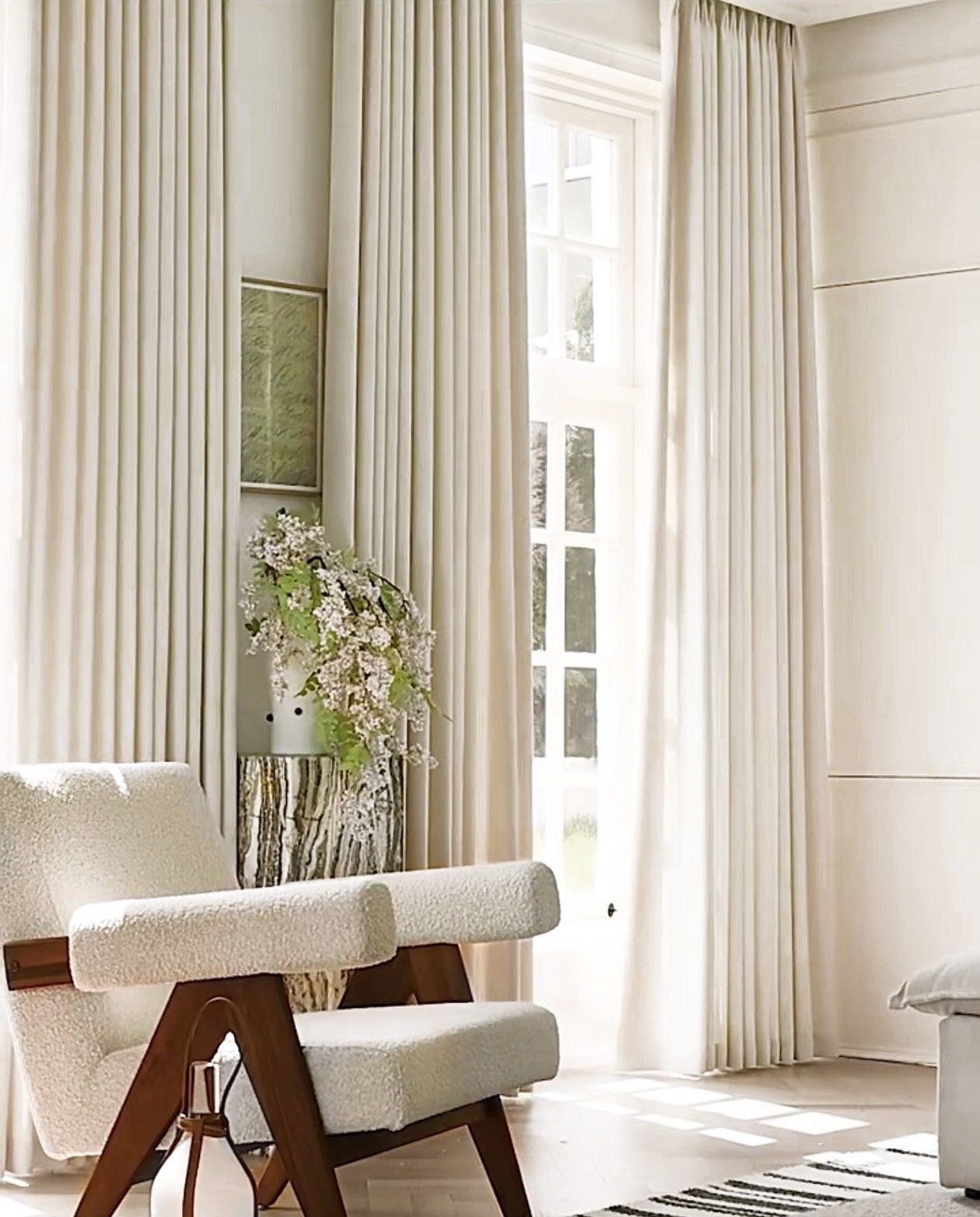
The best window treatments for sliding glass doors in Las Vegas, Nevada usually move in the same direction as the door, stack compactly, and let people reach the handle without a daily struggle. Hunter Douglas Skyline Gliding Window Panels are designed for short, tall, or wide openings and are a strong starting point for sliding doors. Wide windows may also work with screen shades, roller shades, or multiple coordinated units, depending on size, use, privacy, and the desired view.
Start with the Direction of Movement
A sliding glass door moves horizontally. A horizontal treatment such as Skyline Gliding Window Panels follows that movement and can stack tightly for an open view. The panel-track format can suit a broad span of glass without requiring one large sheet of material to roll upward.
This is practical for a door used throughout the day. Panels can be moved to expose the active side, though the exact draw direction and stack location depend on the selected layout and opening. Check where the door handle sits and which panel moves before deciding where the treatment should collect.
Wide windows do not always need a horizontal treatment. If the opening is fixed glass rather than a frequently used door, an upward-moving shade may make sense. The choice should follow the function, not just the width.
Skyline Gliding Window Panels for Broad Openings
Skyline Gliding Window Panels use large vertical fabric panels on a track. The design can cover short, tall, or wide openings and stack into a compact area when open. It creates clean vertical lines and can visually simplify a large wall of glass.
Fabric selection determines much of the result. A lighter or more open material can maintain a brighter connection to the outdoors. A more private material can create a stronger visual barrier when closed. Ask how the selected fabric looks in direct sun, at night with interior lights on, and when several panels overlap.
Stack space is a central planning detail. Even a tight stack occupies some room. It may collect over the glass or extend beyond the opening when wall space permits and the configuration allows it. Measure nearby switches, artwork, trim, furniture, and door hardware before selecting the track width.
Screen Shades for Glare and View
A large fixed window with a valued view may be a good candidate for Designer Screen Shades. These solar shades are designed to manage harsh UV exposure and glare while preserving view. Five opacity choices allow different balances of light control and view-through.
A screen shade can be useful for west-facing glass where afternoon brightness is the main complaint, but a view-through material should not be treated as dependable nighttime privacy. Very wide openings require product-specific review. Multiple shades can reduce individual unit size, though they introduce light gaps and visible breaks.
Roller Shades for Fabric and Privacy Flexibility
Designer Roller Shades bring a broad fabric assortment from sheer to opaque and a minimal rolling profile. They can work on wide windows when the selected dimensions and configuration are appropriate. They may also be divided into aligned shades across a bank of glass.
Dividing a wide opening has practical advantages. Individual shades can respond to different sun angles or sections of the room, and one area can remain open while another is covered. The tradeoff is a gap between fabrics. On windows with narrow mullions, those gaps may align with the frame. On uninterrupted glass, they may be more visible.
Selected Roller Shade configurations offer Duolite or Dual Roller options for additional privacy and light control. The added layer can help a multipurpose room respond differently during the day and evening. Confirm the available fabric pairings, hardware depth, and operating system for the exact opening.
Plan Around Traffic and Furniture
A sliding door is part window and part passage. Note which side is active and where furniture, pets, and people tend to be. These patterns help determine draw direction, control location, and stack position. For a wide fixed window, independent shades may let one section remain open while another controls late-afternoon light, when dimensions and design allow.
Do Not Skip the Nighttime Test
Large glass creates a strong visual connection during the day, but it can feel exposed after dark. Review samples with interior lights on. Look from outside when possible, or assess the sightline from the patio, street, or neighboring property.
Privacy descriptions vary by fabric. Sheer, screen, semi-opaque, room-darkening, and opaque materials should be judged on the actual opening. Room darkening does not necessarily mean blackout, and edge gaps or panel overlaps can affect the result.
Measure the Entire Opening, Not Only the Glass
Custom planning should include glass dimensions, frame depth, trim, handles, locks, baseboards, ceiling height, floor level, wall space, and any obstructions. For doors, check how far handles project and how panels overlap. For wide windows, check mullion positions so multiple shades can align naturally.
Installation surface matters too. The headrail, track, brackets, or cassette needs an appropriate mounting area. Exact product limits and hardware requirements vary by configuration. This is one reason an in-home consultation is valuable for large openings.
Choose a Practical Operating Method
Large or frequently adjusted treatments should be easy to use. Control choices vary by product and configuration. First confirm fabric, privacy, movement, stack, and fit. Then select an operating method that supports the daily routine.